Guild War is one of the most competitive features in Magic Realm Online. Unlike normal battles, winning a Magic Realm Online guild war is not only about having powerful characters or high combat power. A strong guild needs good teamwork, smart planning, and the right battle strategy to defeat opponents and secure victory.
Many players focus only on improving their equipment and level, but guild wars require more than just individual strength. When to attack, how to defend, and how to properly utilize each profession often determine the final outcome.
The previous guide introduced what to upgrade first. This guide explains the best Magic Realm Online Guild War strategy, including team setup, class roles, attack plans, defense tips, and ways to improve your guild performance.
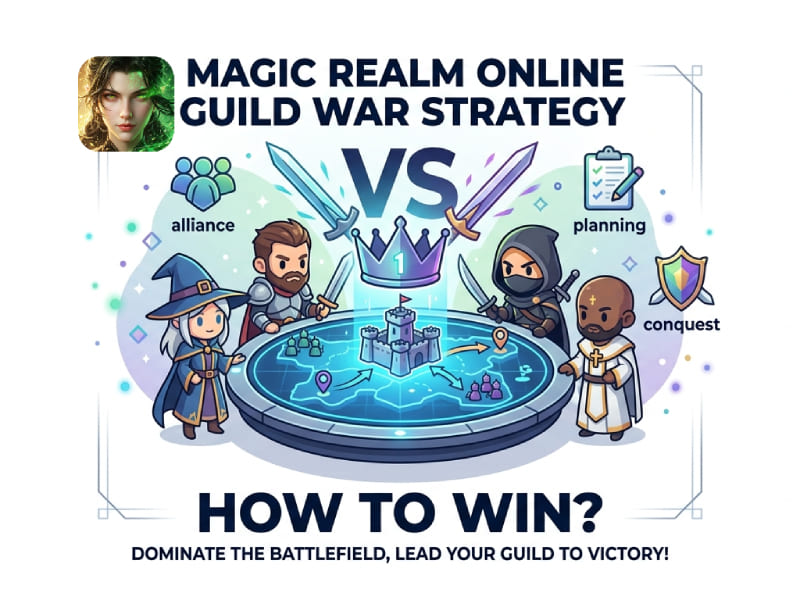
Understand How Guild War Works in Magic Realm Online
Before formulating a strategy, players need to understand the basic objectives of guild wars.
Guild wars typically revolve around controlling key areas, defeating enemy players, and earning points for the guild. Every action taken during the battle will affect the final score, and careful planning is essential to gain an advantage. In intense battles like Master duel, players must coordinate with teammates, choose the right strategies, and make quick decisions to secure important objectives and lead their guild to victory.
A successful guild should focus on:
- Protecting important locations
- Defeating enemy teams efficiently
- Supporting teammates
- Managing battle time
- Adjusting strategies based on the enemy
A common mistake is that players rush into fights without a clear plan. Even a strong team can lose if members fight separately.
Build a Balanced Guild War Team
A good team configuration is the foundation of victory. Different professions have different roles, and each member should be clear about their own role.
Frontline Classes: Control the Battlefield
Front-line players are responsible for absorbing damage and creating space for their teammates.
Classes with high defense and strong survivability are usually suitable for this role.
Their main tasks include:
- Starting fights
- Blocking enemy attacks
- Protecting damage dealers
- Holding important positions
Frontline players should not chase enemies too far. Staying in sync with the team is often more valuable than extra kills.
Damage Dealers: Focus on Key Targets
The role of damage dealers is to quickly eliminate enemy players.
They should not attack targets indiscriminately, but should focus on:
- Enemy healers
- Weak backline players
- High-damage enemies
Good target selection can change the entire battle.
For example, defeating an enemy support player first can reduce the enemy team’s ability to recover during fights.
Support Classes: Keep the Team Alive
Support players are often the key to determining the outcome of a match.
Their role involves more than just healing. They also need:
- Watch teammate positions
- Provide buffs
- Help teammates escape dangerous situations
- Control enemy movement
A support player who stays alive longer can provide more value throughout the battle.
Create Different Teams for Different Situations
A single team configuration may not be able to compete against all opponents.
A powerful guild should prepare a variety of team combinations.
Balanced Team
A balanced team includes:
- Frontline protection
- Damage output
- Support ability
This setup works well for most situations because it can handle different enemies.
Fast Attack Team
A fast attack team focuses on quick kills.
It usually includes:
- High mobility classes
- Strong burst damage
- Players who can quickly enter and leave battles
This team is useful when attacking weak enemy positions.
Defensive Team
A defensive team focuses on holding areas.
It requires:
- Strong defense classes
- Healing support
- Players with crowd control abilities
This setup works well when protecting important locations.
Communication Is the Key to Winning Guild War
Many guild wars are decided by communication rather than character strength.
Guilds should use clear and unambiguous commands in battle.
Important information includes:
- Enemy location
- Team movement
- Attack timing
- Retreat signals
- Target priority
For example, instead of having everyone attack different enemies, the guild leader can choose a single target and have all players focus their fire on it.
A simple plan that the whole team can execute is usually much better than a complex plan that no one can execute. This idea also applies to pve meaning, where clear goals and easy-to-follow strategies help players work together and achieve better results.
Use the Map Advantage
The battlefield itself can provide advantages.
Players should learn:
- Important locations
- Common enemy routes
- Safe areas
- Good defensive positions
Controlling key areas allows your guild to dictate the pace of the battle.
A common mistake is moving around too often without a clear purpose. Sometimes, it’s wiser to hold a favorable position than to seek out battles everywhere.
Attack Strategy: How to Push Enemy Positions
When attacking, patience is important.
Check Enemy Defense First
Do not immediately rush into enemy territory.
Before attacking, observe:
- How many enemies are defending
- Which classes they use
- Where their support players are located
This information helps your team choose the right approach.
Attack Together
A coordinated attack is much stronger than individual actions.
A good attack usually follows this order:
- Frontline players start the fight
- Damage dealers attack priority targets
- Support players protect teammates
- The team continues pressure
If players enter one by one, enemies can defeat them easily.
Know When to Retreat
Sometimes leaving a fight is the correct decision.
A smart retreat can:
- Save team members
- Avoid losing points
- Prepare for the next attack
Winning every small fight is not necessary. The final score matters more.
Defense Strategy: How to Protect Your Territory
Defense requires a different mindset.
Stay Together
A spread-out defense is easily breached.
Players should maintain a solid formation and avoid fighting alone.
Protect Important Players
Damage dealers and support classes typically have low defense.
Front-line players should protect them from enemy attacks.
A team that can keep key players alive can last longer.
Use Counter Attacks
Defensive teams don’t necessarily have to passively take hits.
After stopping the enemy’s attack, seize the opportunity to counterattack.
After the enemy has used up a key skill, they may become weak, which is the best time to launch an attack.
Improve Your Guild Members’ Individual Skills
Team strategy is important, but each player also needs to improve.
Learn Your Class Completely
Players should understand:
- Skill combinations
- Best equipment choices
- Strengths and weaknesses
- Suitable battle positions
A player who understands their class can provide more value even without the highest stats.
Practice Team Coordination
Guild members should practice:
- Following commands
- Moving together
- Protecting teammates
- Switching targets quickly
Regular training helps players build better teamwork.
Choose the Right Skills and Equipment
Guild wars differ from regular PvE content.
Some equipment builds that are effective against monsters may be ineffective against players.
Players should focus on:
- Survival ability
- Crowd control resistance
- Damage efficiency
- Team support
The best equipment combination depends on your role in the team.
Frontline players and damage dealers require different attributes.
Study Enemy Guilds
Knowing your opponent can create a big advantage.
Before important Guild Wars, pay attention to:
- Their common team setup
- Strong players
- Favorite attack methods
- Weak points
If an enemy guild always uses the same strategy, your team can prepare a counter plan.
Common Guild War Mistakes to Avoid
Fighting Alone
Going it alone often comes at a disadvantage.
Guild wars are team battles; cooperation is more important than individual kills.
Ignoring Support Players
Many teams focus solely on dealing damage.
However, support players often determine how long a team can last in a battle.
Changing Strategy Too Slowly
Strategies that work initially may become ineffective later.
Guild leaders should adjust their strategies based on the current situation.
Poor Resource Management
Players should use important skills and abilities with caution.
Using all skills and abilities at the wrong time can put the team in a difficult position during crucial battles.
Best Guild War Strategy Summary
To win Guild War in Magic Realm Online, a guild needs a combination of teamwork, planning, and good execution.
The most important points are:
- Build balanced teams
- Give every class a clear role
- Communicate during battles
- Control important areas
- Attack with coordination
- Defend as a group
- Adjust strategies based on enemies
While powerful characters are important, a well-organized guild has a much higher chance of winning. Proper hero selection helps each member build a balanced team that matches different battle situations. With thorough preparation and teamwork, your guild will perform better in every guild war.